Training & Careers
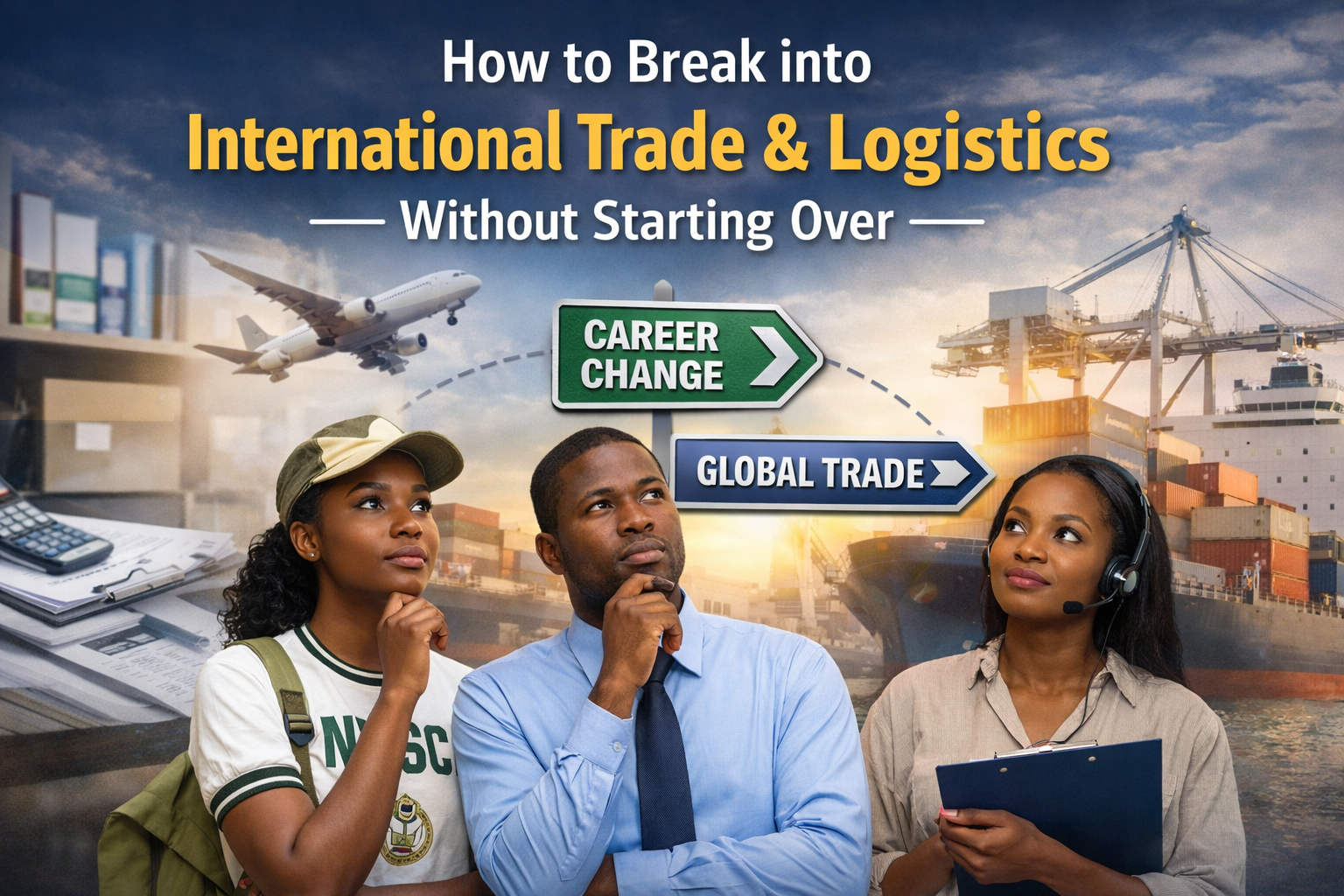
How to Break into International Trade & Logistics Without Starting Over
How to Break into International Trade & Logistics Without Starting Over
Transitioning into a new career can feel overwhelming—especially when it seems like you have to erase years of experience and begin again. For many professionals considering international trade and logistics, this fear becomes a major roadblock.
But here’s the truth: you don’t need to start over to build a successful career in international trade and logistics.
With the right structure, industry knowledge, and professional certification, you can reposition your existing experience and step confidently into this globally relevant field.
Why National Trade & Logistics Attracts Career Switchers
International trade and logistics sit at the center of the global economy. Every product—food, fuel, electronics, pharmaceuticals, fashion—moves through a structured supply chain before reaching the final consumer.
This industry continues to attract professionals because it offers:
-
Global relevance and cross-border career opportunities
-
Diverse roles across operations, documentation, compliance, logistics, and supply chain coordination
-
High demand across multiple industries
-
Skills that remain valuable regardless of economic cycles
Yet, despite the opportunities, many professionals hesitate—assuming the field is too technical or reserved only for those with logistics degrees.
The Reality: You Already Have Transferable Skills
One of the biggest misconceptions about international trade and logistics is that you must come from a specialized background. In reality, many successful professionals in the industry transitioned from roles such as:
-
Administration and office management
-
Banking and finance
-
Procurement and purchasing
-
Operations and project coordination
-
Sales, customer service, and business development
-
NYSC and entry-level graduate roles
If your current or past role involved documentation, coordination, compliance, communication, data handling, or problem-solving, you already possess skills that align closely with trade and logistics functions.
What’s usually missing is not ability—but structured industry knowledge.
Why Experience Alone Is No Longer Enough
In previous years, many professionals learned international trade purely through on-the-job exposure. Today, that approach comes with serious limitations.
Global trade has become more complex due to:
-
Strict customs and regulatory frameworks
-
Detailed documentation requirements and INCOTERMS rules
-
Increased penalties for non-compliance and errors
-
Faster turnaround times and higher scrutiny at borders
Without formal training, professionals often feel uncertain, rely heavily on third parties, or remain stuck in support roles without clear growth paths.
To transition successfully, you need clarity, confidence, and competence—not trial and error.
How CITLS Enables a Smart Career Transition
The Certified International Trade & Logistics Specialist (CITLS) program is designed specifically for professionals who want to enter or reposition themselves within international trade and logistics—without discarding their existing experience.
Rather than starting from scratch, CITLS builds on your current skill set and fills in the industry-specific gaps.
Through the CITLS program, you gain:
-
A clear understanding of how international trade operates from origin to destination
-
Practical knowledge of trade documentation and INCOTERMS
-
Insight into freight, logistics, and supply chain coordination
-
Confidence in customs, compliance, and regulatory processes
-
A professional certification that signals competence and readiness to employers
The emphasis is on practical, workplace-relevant knowledge—not abstract theory.
Who CITLS Is Designed For
CITLS is especially valuable if you are:
-
Transitioning from administration, finance, or operations into trade-related roles
-
An NYSC member or recent graduate seeking industry relevance
-
Supporting import/export activities without formal training
-
An entrepreneur involved in cross-border trade or logistics
-
Looking to gain globally applicable skills without returning to university
The program provides structure, professional language, and confidence—key factors employers look for when hiring.
What Changes After CITLS

Professionals who complete the CITLS program often experience:
-
Increased confidence when handling trade and logistics responsibilities
-
Improved accuracy in documentation and compliance-related tasks
-
Better collaboration with freight forwarders, customs agents, and supply chain partners
-
Stronger positioning for logistics, trade, and operations roles
Instead of feeling like an outsider trying to break into the industry, you begin to operate with clarity, credibility, and professional confidence.
Upgrade Your Career, Don’t Reset It
Breaking into international trade and logistics does not require starting over—it requires strategic upskilling.
With the right certification, your existing experience can become a foundation for global career relevance. The Certified International Trade & Logistics Specialist (CITLS) program serves as that bridge, helping professionals transition with direction, competence, and purpose.
If international trade is where you see your future, the smartest move is not to reset your career—but to upgrade it.


Comments