
Supply Chain & Trade
The Hidden Cost of Supply Chain Disruptions: It’s Not What Most Leaders Think
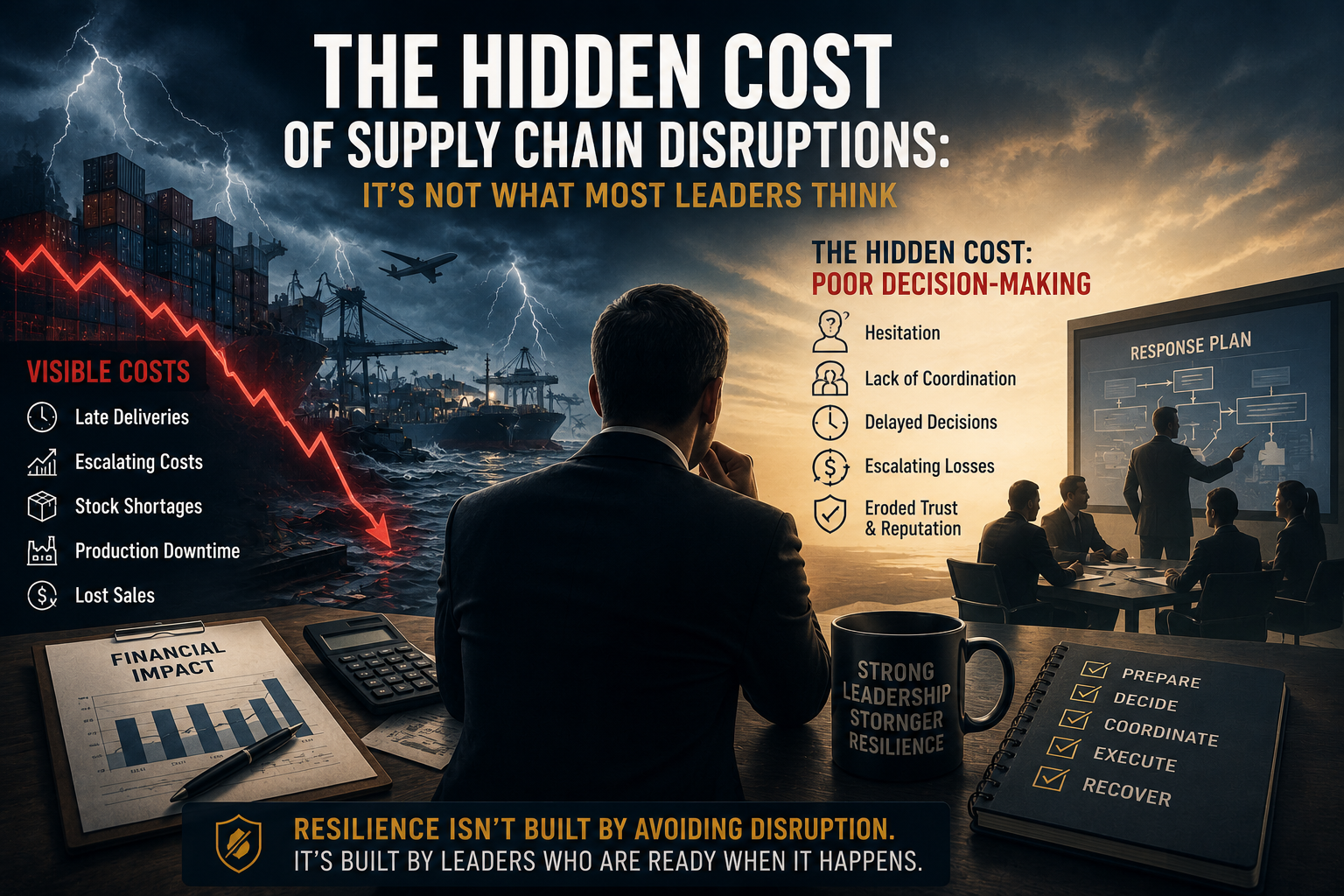
When discussions about supply chain disruptions arise, the focus is often on the visible costs.
Late deliveries.
Escalating freight charges.
Stock shortages.
Production downtime.
Lost sales.
These are the consequences that appear on financial reports and operational dashboards. They are measurable, immediate, and impossible to ignore.
Yet beneath these obvious costs lies another category of losses—one that is far more damaging because it is rarely measured.
The cost of poor decision-making.
Every disruption places leaders under immense pressure. Information is incomplete. Stakeholders demand immediate answers. Customers want assurances. Teams wait for direction. Suppliers are uncertain. Time becomes increasingly valuable.
In these moments, leadership capability becomes the defining factor between organizations that recover quickly and those that struggle for weeks or even months.
Unfortunately, many businesses discover too late that while they have invested heavily in systems, infrastructure, and technology, they have invested very little in preparing their leaders for high-pressure situations.
A warehouse management system can identify inventory shortages.
A transport management platform can highlight delayed shipments.
Predictive analytics can warn of potential disruptions.
But none of these systems can decide which customer orders should take priority, how limited resources should be allocated, or when an organization should activate contingency plans.
Those decisions belong to people.
And people perform differently under pressure.
Some become overwhelmed by uncertainty. Others delay action while searching for complete information that may never arrive. Some focus on isolated problems instead of understanding the wider operational impact.
The result is often a disruption that grows more expensive not because the initial event was catastrophic, but because the response lacked clarity, speed, and coordination.
Organizations that consistently recover well understand this reality.
They invest in leadership readiness with the same seriousness they invest in digital transformation.
They create clear command structures before emergencies occur.
They train managers to make timely decisions using structured frameworks rather than relying on instinct alone.
They encourage collaboration across procurement, logistics, operations, and finance, ensuring that every response is coordinated rather than fragmented.
Most importantly, they recognise that resilience is not built by avoiding disruption. It is built by improving the quality of leadership during disruption.
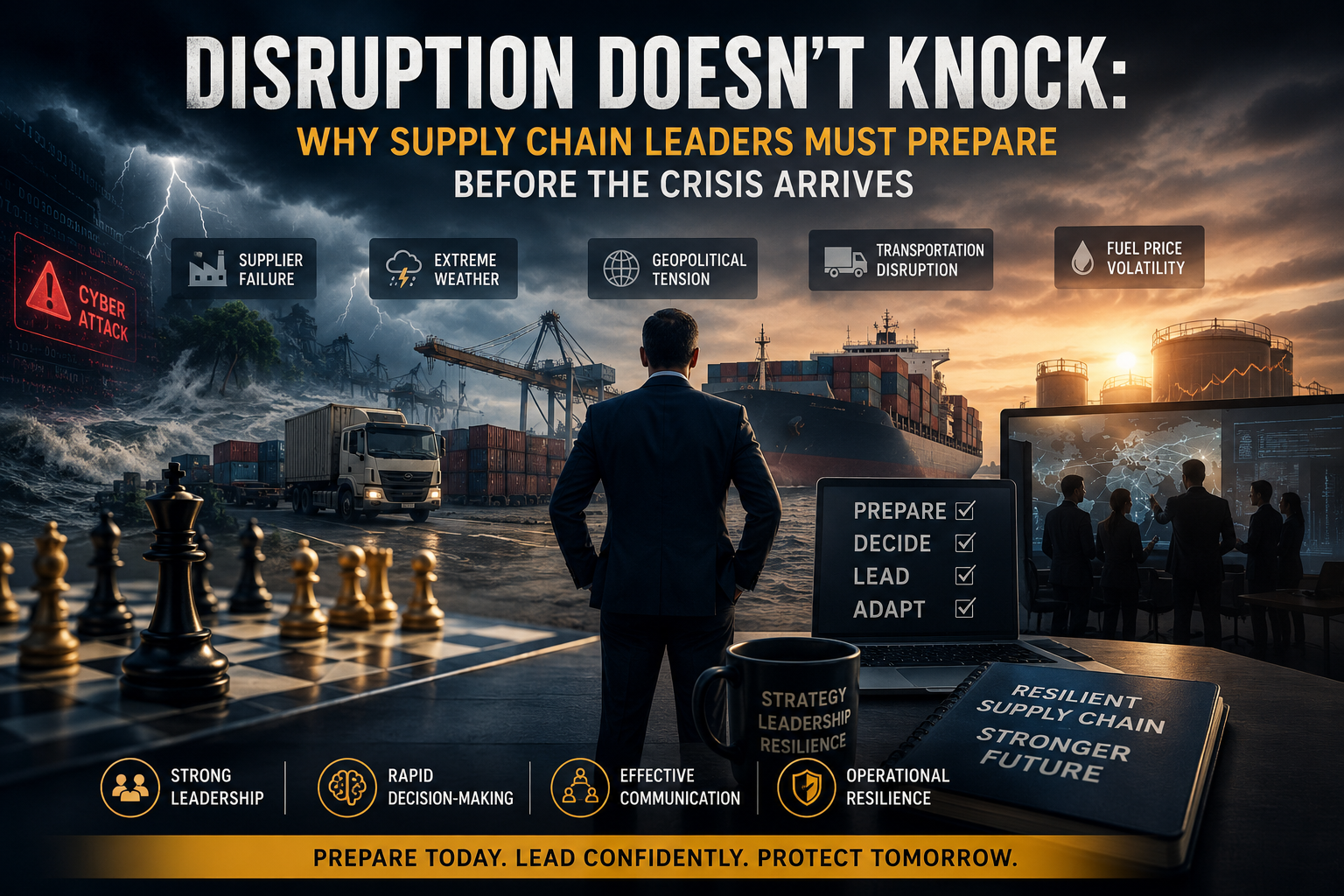
As supply chains become increasingly global and interconnected, organizations can no longer assume that tomorrow will resemble today. New risks will continue to emerge, whether from geopolitical instability, cyber threats, climate events, regulatory changes, or economic volatility.
The question is no longer whether disruption will occur.
It is whether leadership is prepared when it does.
Final Thought
Every disruption carries a financial cost.
But the greatest losses often come from hesitation, confusion, and poor coordination rather than the disruption itself.
At RAPID Command School, we help operational leaders develop the confidence, discipline, and practical decision-making skills needed to respond effectively when every minute matters. Because resilient organizations are built by resilient leaders.



Comments