Register Login

Supply Chain & Trade

Disruption Doesn’t Knock: Why Supply Chain Leaders Must Prepare Before the Crisis Arrives For years, supply chain success was measured by one thing: efficiency. Organizations focused on reducing costs, shortening lead times, optimizing inventory, and st
By: Benedictta | Jun 29, 2026
Disruption Doesn’t Knock: Why Supply Chain Leaders Must Prepare Before the Crisis Arrives  For years, supply chain success was measured by one thing: efficiency.  Organizations focused on reducing costs, shortening lead times, optimizing inventory, and st

 

For years, supply chain success was measured by one thing: efficiency.

Organizations focused on reducing costs, shortening lead times, optimizing inventory, and streamlining operations. While these strategies delivered significant value, today's business environment demands something more. In a world where disruptions have become increasingly frequent, efficiency alone is no longer enough.

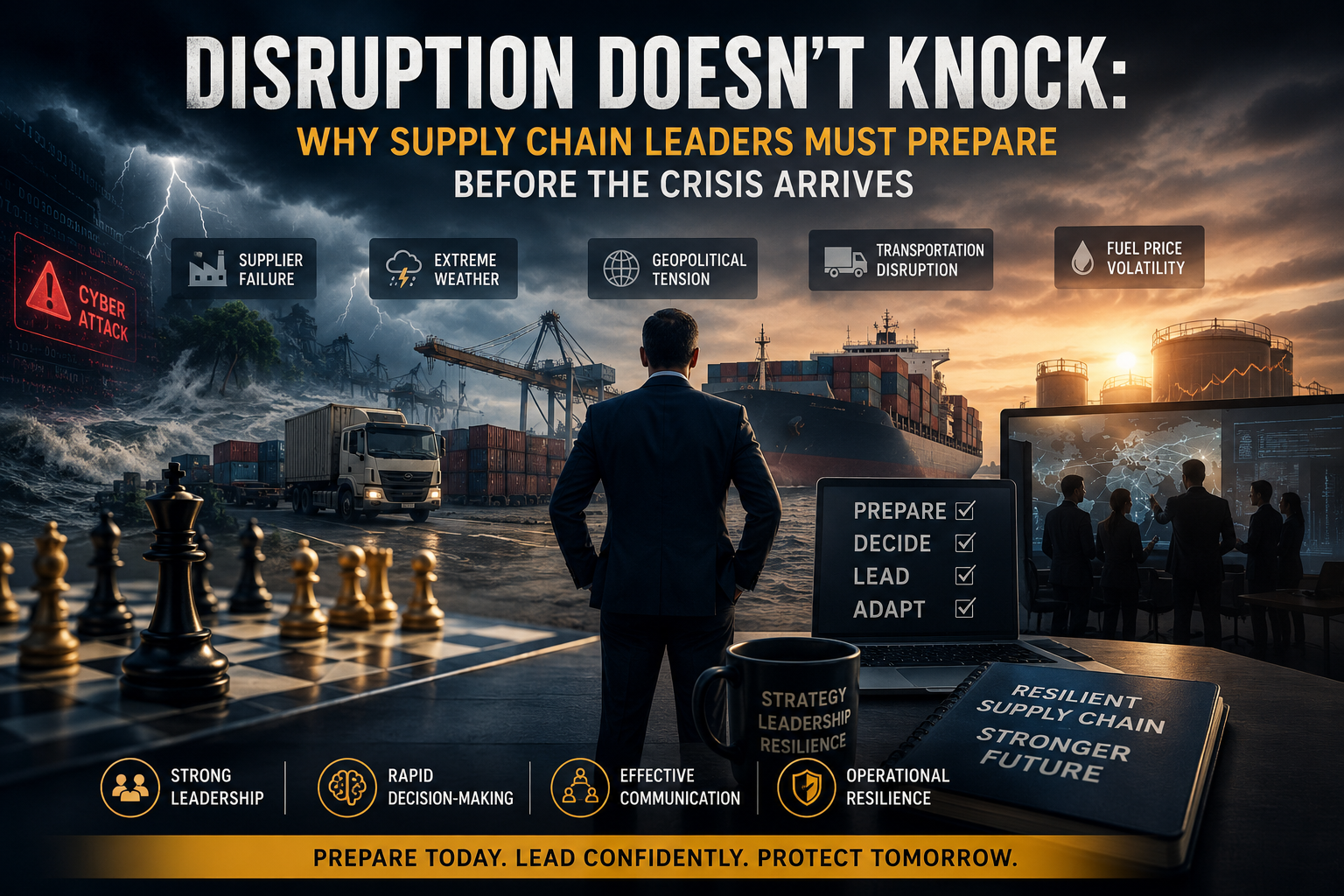
From supplier failures and cyberattacks to extreme weather, geopolitical tensions, and transportation disruptions, supply chains are constantly exposed to unexpected challenges. These events no longer occur once in a decade—they are part of the new reality.

The organizations that recover fastest during disruption are not always those with the biggest budgets or the most advanced technology. More often, they are the ones led by professionals who can make sound decisions under pressure, communicate effectively, and keep operations moving despite uncertainty.

This is where leadership becomes a competitive advantage.

Most supply chain professionals are highly skilled at managing routine operations—forecasting demand, negotiating with suppliers, managing inventory, and coordinating logistics. But disruption doesn't follow routine. It creates uncertainty, forces rapid decisions, and requires leaders to act even when they don't have all the answers.

In those moments, technical expertise alone isn't enough.

Effective leaders know how to assess risks, prioritize critical actions, coordinate teams, and maintain stakeholder confidence while navigating rapidly changing conditions. These capabilities aren't developed during a crisis—they are built long before one occurs.

While many organizations continue investing heavily in technology and automation, fewer invest in preparing their people to lead through disruption. Yet technology can provide data and visibility; it cannot replace human judgment, decisive leadership, or clear communication when the unexpected happens.

As supply chains become more complex and interconnected, resilience is becoming just as important as efficiency. Organizations that prepare their leaders before disruption strikes will be better positioned to protect operations, serve customers, and recover faster when challenges arise.

Closing Reflection

At RAPID Command School, we believe operational resilience starts with capable leadership. Our programmes equip managers, supervisors, and operational professionals with practical skills to make confident decisions under pressure, lead teams through uncertainty, and strengthen organizational resilience.

Because resilience isn't built during a crisis—it is built before the crisis arrives.


Comments

No comments yet. Be the first!
Recent Posts

The Hidden Cost of Supply Chain Disruptions: It’s Not What Most Leaders Think

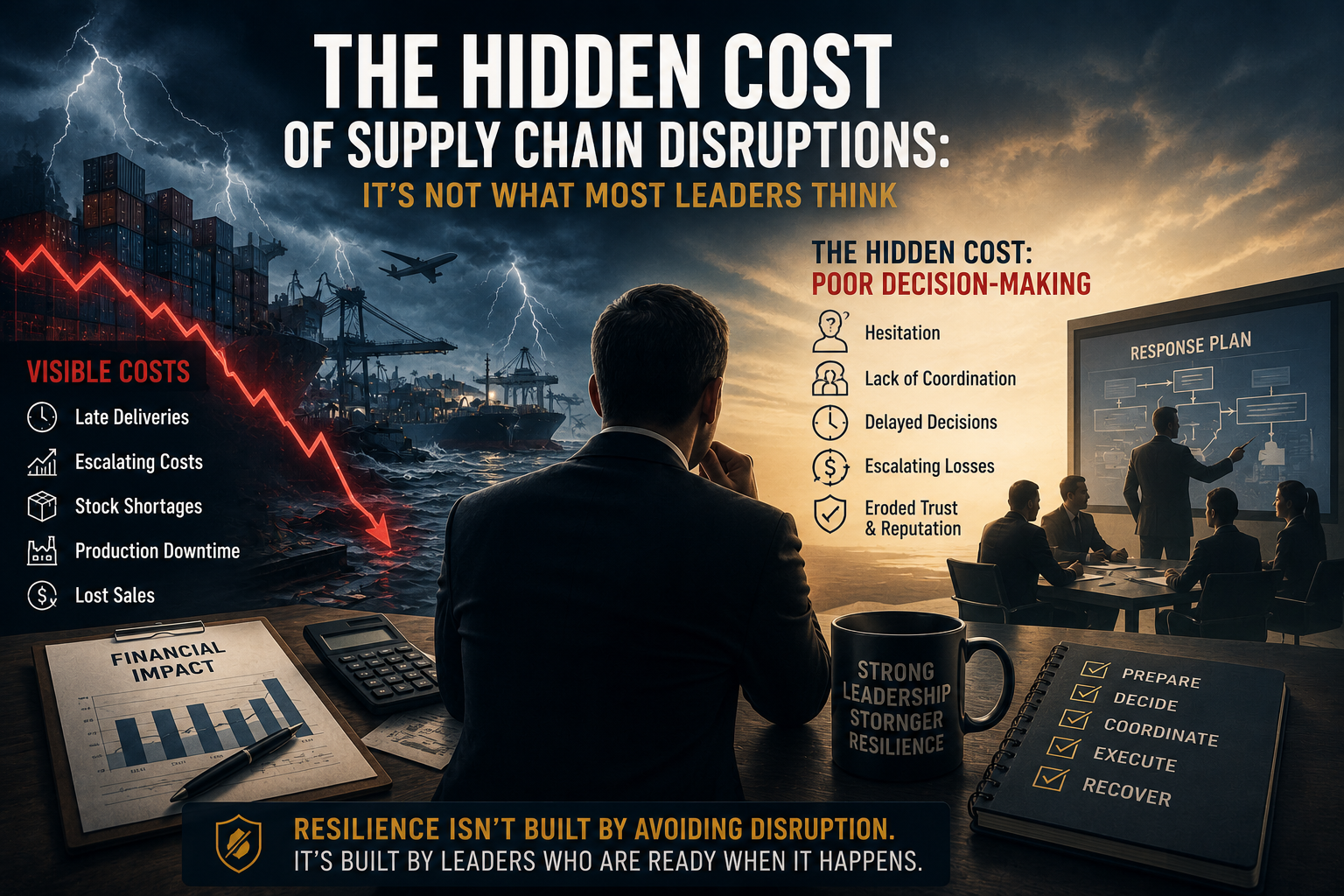
The biggest cost of a supply chain disruption isn't always financial—it's poor decision-making under pressure. Technology can support operations, but resilient leaders are what keep businesses moving when disruption strikes. Preparation today determines performance tomorrow.... Read More

How to Break into International Trade & Logistics Without Starting Over

Breaking into international trade and logistics doesn’t mean starting your career all over again. Many professionals already possess transferable skills—from documentation and coordination to compliance and problem-solving—but lack the structured industry knowledge needed to transition confidently.... Read More

Why an MBA in Supply Chain Management Is the Career Move Smart Professionals Are Making

Supply chains have become strategic assets and the professionals who manage them are now expected to think, lead, and decide at a global level.... Read More

The Ripple Effects of Global Conflicts on African Supply Chains

How wars, sanctions, and trade restrictions disrupt regional trade flows... Read More

View All Blog Posts

Join Our Newsletter

Get the latest insights, news, and updates from Multimix Academy delivered straight to your inbox.